
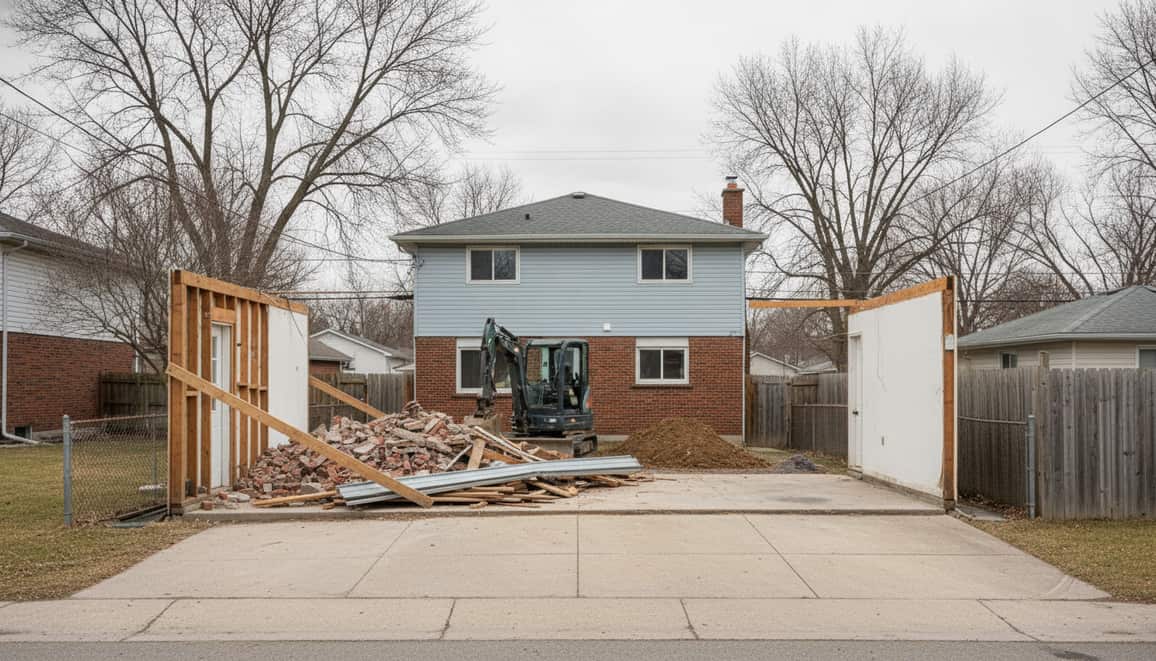
Building Demolition on Staten Island
A whole structure comes down in a sequence, not in one movement. What decides that sequence on this island is usually the lot rather than the building.
What this covers
Whole structures, residential and commercial, and the lot they stand on.
Whole structures that have reached the end of their life, taken down and cleared off the lot. Residential and commercial.
House demolition on a single lot is the job this page is written around, and a commercial building runs on the same method at a different scale.
This is also the most common demolition on Staten Island by some distance. Of the 399 residential buildings demolished across New York City in 2025, 104 were here, and between them they held 110 homes. Almost every one of them was a single house on its own ground.
Why sequence decides everything
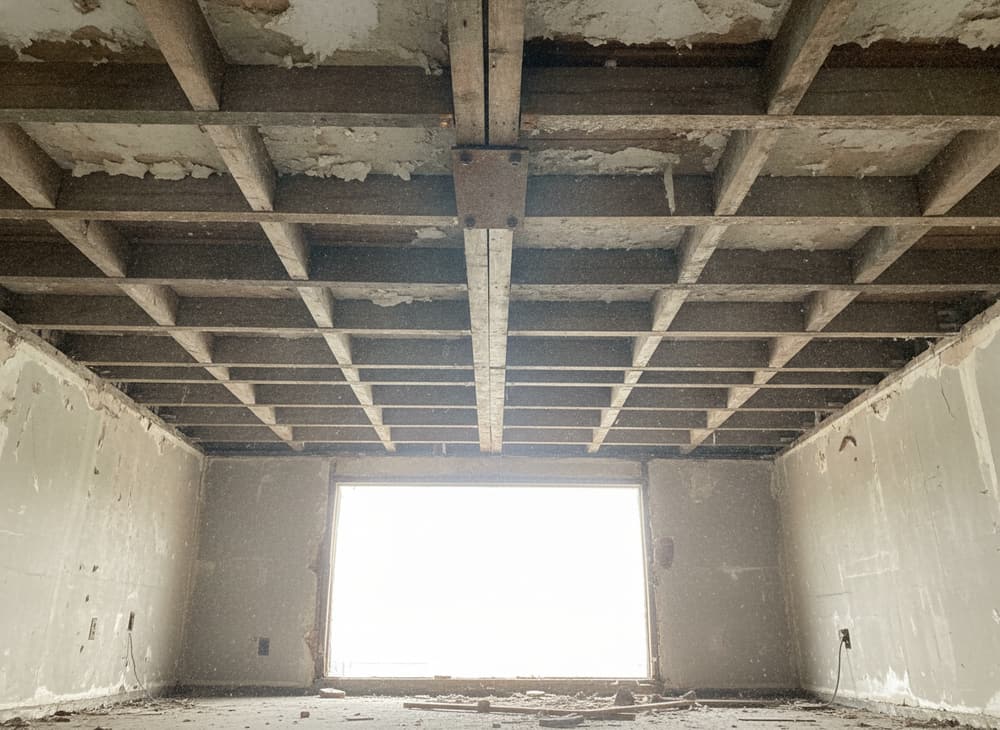
A building demolition is a sequence problem before it is a machine problem. A structure is a system of load paths. Taken apart in the right order, each stage leaves what is left standing stable enough to keep working on. Taken apart carelessly, the building sets the order instead, usually while somebody is standing in it.
That is the whole reason a survey comes first and the reason a quote follows the survey rather than the description.
Tell us what is standing on the lot.
The structure, the access and the boundary. We look at all three before we quote.
A house standing free, and a house sharing a wall
Two conditions, and the second one settles the method before anything else does.
Free on its own lot
The limits are rarely the building. They are what surrounds it: how machinery gets in and out, what the driveway will carry, which trees stay, and how close the boundary is.
There is usually room to work, so the job is governed by the route rather than by the walls.
Sharing a wall
The wall you share is holding up the house next door as well, so it stays standing. We support it while the rest comes off it, and we close it up before we leave.
That single condition decides the method, the machinery and the order, and it is settled before anything comes down.
What is under it
What sits below ground level changes a teardown more than the house above it does. A full basement, a crawl space and a slab poured on grade are three different jobs once the structure is off them, and old footings often run wider than the walls did.
Whether the foundation comes out or stays in the ground decides the machinery, the number of truck loads and the cost.
How a structure comes down
Four stages, every time, in this order.
-
Survey
Structure, load paths, services, and what the lot allows. This is where the method is decided and where the figure comes from.
-
Utilities off
You arrange the shut-offs with the utility company. We tell you which ones the job needs, and we check on site that the lines are dead before anything opens.
-
Take down
Sequenced from the top, and from the non-structural inward. Anything that stays gets supported before anything comes off it.
-
Clear the ground
Material removed and the footprint left level. Nothing stacked on the property for somebody else to deal with.
Protecting what stays
The house next door, the boundary, the driveway and the services under it.
The house next door, the boundary line, the driveway surface and the services running under the ground all have to survive the job.
We identify what stays before anything comes down, we work to that, and we tell the neighbours what to expect and when.
The lot after the building
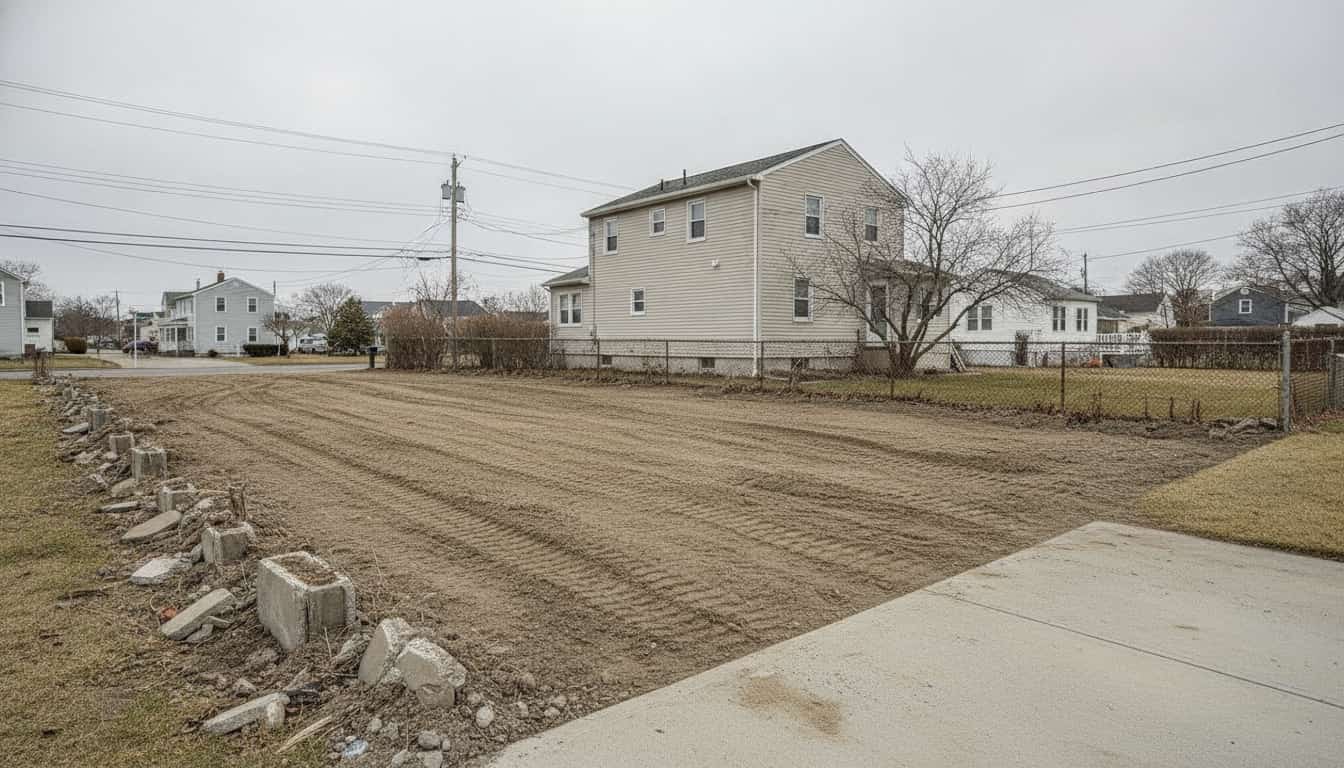
The footprint left level and clear, and the material gone. Taking the building down and getting it off the property are one job here rather than two, and the figure you are given is the figure for an empty, level lot. What decides that figure is set out below.
What decides the cost of taking a house down
How much it costs to demolish a house is the first thing everybody asks and the last thing anybody can answer sight unseen. Two houses the same size on the same street can be two different jobs. Four things swing the number, and floor area is not the biggest of them.
What it is built of
Timber frame, brick, block and masonry all come apart differently and weigh very differently once they are down.
Weight is what fills trucks, and trucks are what the disposal half of the number is made of.
How the lot works
One driveway, one route across the property, and a fixed number of truck movements a day.
Two identical houses, one on an open corner and one at the back of a narrow lot, are not the same job and never price the same.
What has to stay
A shared wall holding up the house next door. A boundary. A driveway surface the owner is keeping. A mature tree.
Supporting and protecting what stays is planned work with its own hours in it.
The half that leaves on a truck
People think of demolition as the machine. Most of the cost is what happens after the machine stops: the volume and the weight of what is now lying on the lot, and how many movements it takes to get it off.
That is why a house that comes apart quickly can still be an expensive job, and why access is the first thing we ask about.
Why we do not give a figure sight unseen
The things that move the number are the things nobody can see from the street.
Not because we are being cagey. Because a number given blind gets corrected once somebody is standing on the property, and a corrected number is worse for you than a day’s wait. Price and start date do not move together either: the date is set by what has to happen before a machine can start, and the services being off is the single most common reason a job waits.
None of what follows is required, and all of it makes the visit shorter and more useful. Roughly how big the house is and how many floors. What the outside walls are made of. Whether there is a basement, a crawl space or a slab. Whether anything is still connected to it, and whether anyone is still using it. Whether it is attached to the house next door on either side. How a truck would get onto the lot, and what stands next to it. What you do not know, we work out on the property.
Questions we get asked
How long does a house demolition take?
It runs in the same four stages every time: the survey, the utilities off, the take down, and clearing the ground.
What decides the length is the size of the structure, how much of it has to come apart by hand rather than by machine, what is under it, and how many truck movements the access allows in a day. We walk you through the stages for your property when we look at it, so you know the order before anything starts.
What do you need to know before you can quote a teardown?
What the building is, roughly how big, how many floors, and what it is built of. Whether anything is still connected to it and whether anyone is still using it. What is under it, if you know. How a machine and a truck would get onto the lot, and what stands next to it on each side.
You do not need answers to all of that. What you do not know, we work out on the property.
Can you take down just part of a building?
Yes, and it is a common job. A single floor, one wing, an extension coming off the back, or everything inside while the shell stays up.
The work is deciding what holds the rest of it up and keeping that held up while the part you want gone comes off. Describe what you want removed and we will tell you which job it is.
Can I get a price without a visit?
We can tell you what a job like yours involves and what will move the number, and often that is enough to know whether to go further.
We do not quote a figure before we understand what is under the house, what it is built of and how the lot works, because a figure that ignores those things changes later. The address and what is coming out are enough to get a visit arranged.
How much does it cost to demolish a house?
It comes down to four things: what is under it, what it is built of, how the lot works, and what has to stay standing around it.
Two houses with the same floor area on the same street can differ by a factor of three once somebody has stood on both lots. That is not a hedge, it is the actual shape of this work, and it is why the visit exists.
Tell us what is standing on the lot
We come and look at the structure, the access and the boundary before quoting.